
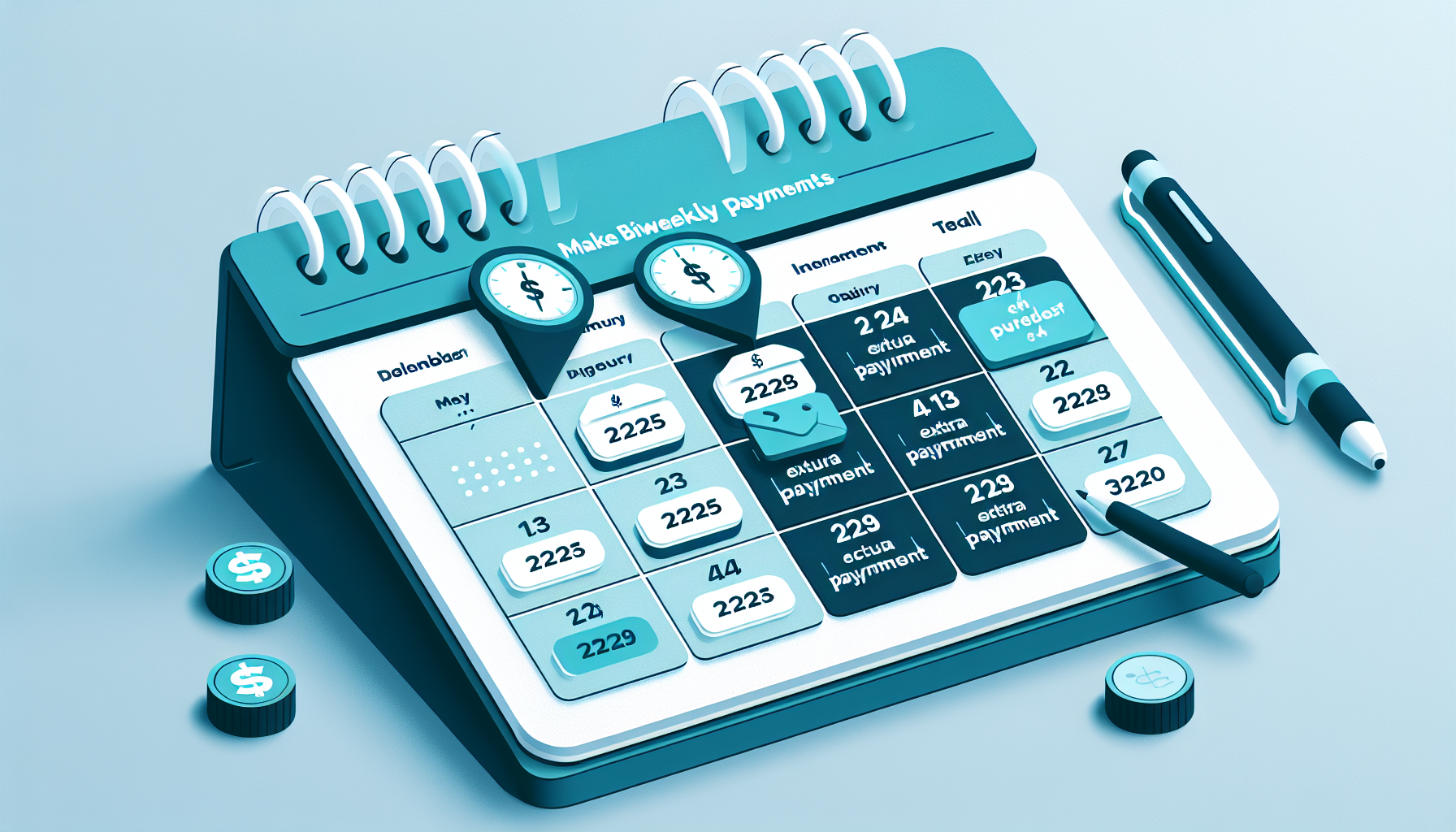
A biweekly payment strategy can reduce your mortgage or loan interest costs by adding one extra monthly payment each year without dramatically changing your budget. Use this calculator to compare standard monthly payments with biweekly payments, estimate total interest savings, and see how much faster you could pay off your balance.
Understanding Biweekly Payment Savings
Biweekly payments are a common debt repayment strategy, especially for mortgages, auto loans, and other installment loans. Instead of making one full payment each month, you make half of your monthly payment every two weeks. Because there are 52 weeks in a year, this schedule results in 26 half-payments annually, which equals 13 full monthly payments instead of 12. That extra payment can reduce your principal faster and lower the total interest you pay over the life of the loan.
The reason this works is tied to amortization. With a traditional fixed-rate loan, a portion of each payment goes toward interest and the rest goes toward principal. Early in the loan, interest makes up a larger share of the payment. When you pay more frequently, principal can decline faster, and future interest charges are calculated on a lower balance. Over time, that can shorten the payoff period and produce meaningful savings.
Not every biweekly plan works the same way. Some lenders or servicers simply hold your half-payments and apply them once per month, which may reduce the convenience benefit but not always the interest advantage. Others apply each draft as it is received, which can improve the savings effect. There are also third-party payment processors that charge enrollment fees or per-draft fees. Those costs can reduce or even offset the benefit, which is why comparing gross savings and net savings is important.
Another factor is whether you are starting at the beginning of the loan or switching later. If you are already several years into repayment, the remaining interest may be lower than it was at origination, so the savings from switching may be smaller. Even so, biweekly payments can still help accelerate payoff and create a disciplined repayment rhythm that aligns with a paycheck schedule.
This calculator helps estimate the difference between standard monthly payments and a biweekly approach based on your balance, rate, term, fees, and any extra monthly amount you want to add. While the math can provide a useful estimate, actual savings depend on your lender’s posting method, your exact amortization schedule, and whether prepayments are applied directly to principal. Always confirm how your servicer handles extra and biweekly payments before making changes.
Practical Tips
If you are considering biweekly payments, first ask your lender how the payments are processed. The biggest question is whether each half-payment is applied immediately or held until a full monthly payment is collected. Immediate application may improve savings, while delayed application may mainly serve as a budgeting tool.
Next, review all fees. A small processing fee may not matter much on a large mortgage with a high interest rate, but it can meaningfully reduce savings on smaller balances or lower-rate loans. In some cases, you may be better off making one extra principal payment each year on your own rather than enrolling in a fee-based biweekly program.
It is also smart to check your cash flow. Biweekly payments often match paycheck timing, which can make budgeting easier. But if your income is irregular, a monthly payment plus occasional extra principal payments may be more flexible. The best strategy is one you can sustain consistently without creating strain elsewhere in your finances.
Finally, verify that extra funds are applied to principal, not future scheduled payments. If your lender advances your due date instead of reducing principal, your interest savings may be lower than expected. Keep records, review statements, and revisit your payoff strategy periodically as rates, balances, and financial goals change.
FAQ
Do biweekly payments always save money?
Not always. They often reduce interest and shorten repayment, but the result depends on your interest rate, remaining balance, loan term, and any fees charged by the lender or payment processor. If fees are high, net savings may be limited.
Is biweekly the same as making one extra payment per year?
In many cases, yes. A true accelerated biweekly plan creates 26 half-payments annually, which equals 13 full monthly payments. That extra full payment each year is a major reason the loan can be paid off faster.
Can I do this myself without enrolling in a program?
Often, yes. Some borrowers simply make their normal monthly payment and send extra principal payments during the year. This can avoid third-party fees, but you should confirm your lender’s rules and make sure extra amounts are applied correctly.
Disclaimer: This calculator is for educational purposes only and does not constitute financial, legal, or tax advice. Results are estimates and may differ from your lender’s actual amortization schedule, payment posting practices, and fees. Consult your lender or a qualified financial professional before changing your repayment strategy.
Save your progress
Create a free account to save your results and track your debt payoff over time — free.
My Credit Signal: Free Credit Tools, Calculators & Tips

Free credit calculators and guides from My Credit Signal. Check your utilization, simulate score changes, plan payoffs and build better credit.
Price Currency: USD
Operating System: Web Browser
Application Category: FinanceApplication
4.9
Pros
- 100% free credit tools with no sign-up required
- Easy-to-use calculators for credit scores, debt payoff, and financial planning
- Expert tips and educational content to understand credit concepts
- Multiple debt payoff strategies including snowball and avalanche methods
- Regular new tool additions and updates
Cons
- Does not pull live credit reports directly
- No mobile app available yet
Want to understand your credit report?
Get plain-English explanations with our free AI Credit Analyzer →