Contents
The real cost of missing a credit alert
You log into your email after work and see a message from a credit monitoring service: a new account was reported, your balance jumped, or a payment status changed. It is easy to think, “I’ll check that later.” But later can get expensive. A single missed payment can stay on your credit file for up to 7 years, and a surprise balance spike can push your credit utilization high enough to drag your score down by dozens of points in one billing cycle.
Credit monitoring is not just about identity theft headlines. It is also about catching the ordinary changes that quietly cost people money. A 40-point score drop can mean a higher auto loan rate, a more expensive insurance premium in some states, or less favorable credit card offers. On a $25,000 car loan, even a 2 percentage point rate difference can add more than $1,300 in interest over 60 months.
The problem is that many people get alerts but do not know which ones matter most. Some notifications are informational. Others deserve same-day attention. Knowing the difference can help you protect your score, avoid unnecessary interest, and respond before a small issue turns into a costly one.
4 myths debunked
Myth 1: All credit alerts are equally urgent
They are not. A balance update showing your card reported at 42% utilization matters, but it usually does not require an emergency response. A notice about a new hard inquiry or a newly opened account you do not recognize is different. That can point to fraud or an application mistake, and speed matters.
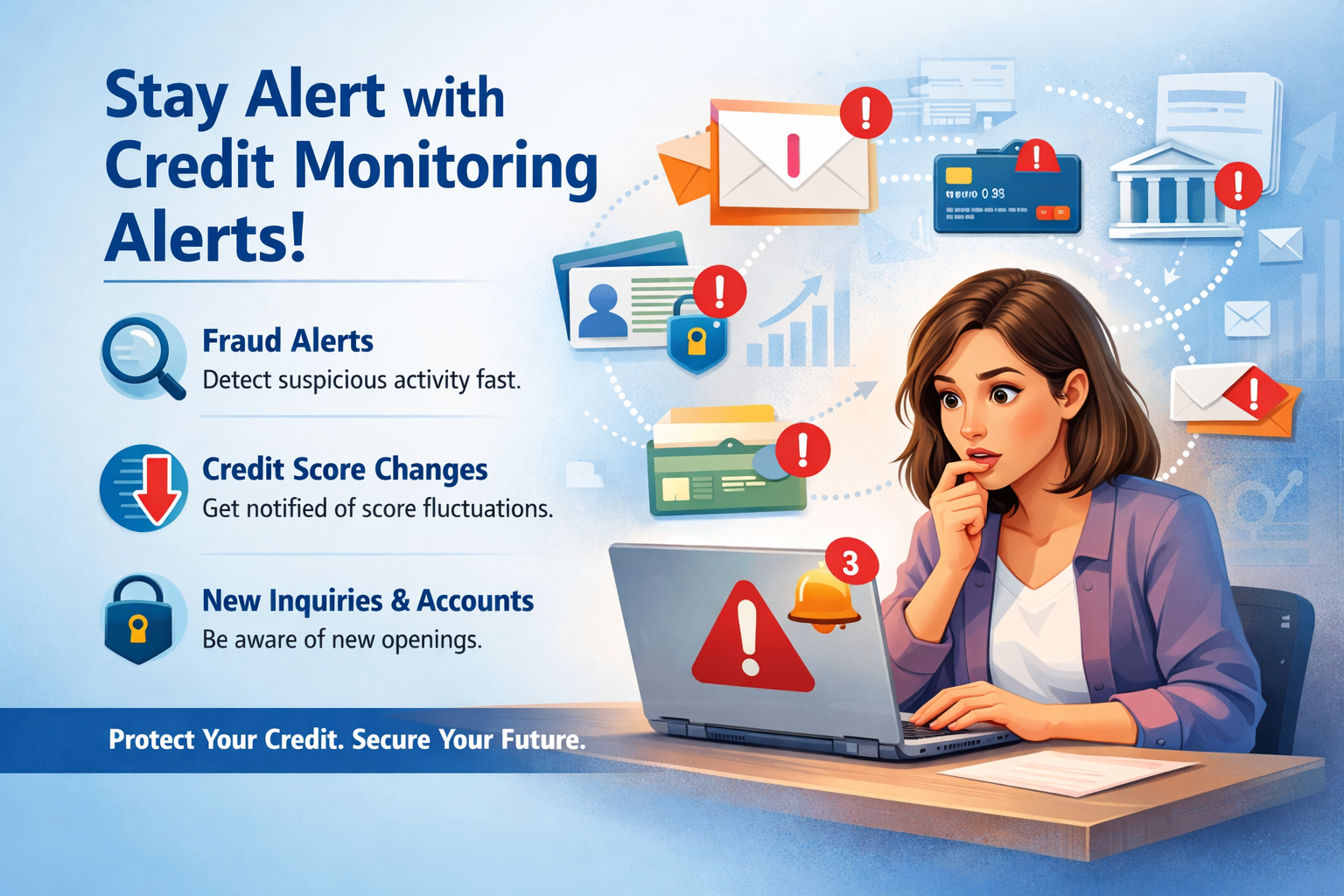
A practical rule is to sort alerts into three buckets: same day, this week, and monitor only. Unknown inquiries, new accounts, and delinquency notices belong in the same-day bucket. Utilization changes, score updates, and credit limit changes usually fit into this week unless you are applying for a mortgage or auto loan soon.
Myth 2: A credit score drop always means something is wrong
Not necessarily. Scores move for normal reasons. If one card reports a $1,200 balance instead of $300, your score can dip even if you paid on time and did nothing “bad.” Credit monitoring helps you connect the drop to a cause so you can respond calmly instead of guessing.
The action step is to look for the trigger before you panic. Check whether a balance increased, a hard inquiry posted, or an old loan was paid off and closed. Understanding the cause helps you decide whether to pay down balances, wait for the next reporting cycle, or investigate further.
Myth 3: Monitoring only matters if you have excellent credit
People rebuilding credit often benefit the most from monitoring. When your score is in the 580 to 680 range, even modest changes can affect approvals and interest rates. Catching a reported late payment, a utilization spike, or an unexpected collection notice quickly can save months of recovery time.
Monitoring also helps beginners see how credit behavior turns into score movement. That feedback loop matters. When you can connect a $500 paydown to a score improvement, you are more likely to stick with the habits that work.
Myth 4: Monitoring replaces active money management
It does not. Credit monitoring tells you what changed. It does not make your payment, trim your budget, or choose the best debt payoff strategy for you. It works best when paired with a system for tracking due dates, balances, and progress.
That is why the strongest approach combines alerts with a simple weekly money review. Spend 10 to 15 minutes once a week checking balances, upcoming due dates, and recent alerts. That short routine can prevent the most common score-damaging mistakes.
What the numbers actually say
Not every alert has the same likely impact on your credit score. Payment history is the biggest scoring factor in most major models, which is why a late payment alert can be serious. Credit utilization is another major factor. If your revolving balances rise from 10% of your total limits to 45%, your score may drop noticeably even if you never miss a payment.
Here are useful benchmarks. Under 10% utilization is generally strong, under 30% is often manageable, and above 30% can start hurting more. Above 50% tends to create more pressure, especially if multiple cards report high balances at the same time. If you have a $6,000 total credit limit and your reported balances rise to $3,000, that is 50% utilization. Paying that down to $900 before the statement closes brings you back to 15% and can improve your profile quickly.
Hard inquiries also deserve context. One inquiry may have a small, temporary effect, often just a few points. Several inquiries in a short window can signal elevated risk, especially outside rate-shopping categories. New accounts can lower your average age of accounts and increase uncertainty for lenders, which is why an unknown account alert should never be ignored.
Collections and derogatory updates are usually the most serious category. Even when the amount is small, the presence of a negative mark can matter more than the dollar figure. A $95 collection can still damage your profile more than a temporary utilization jump from $95 of extra spending.
Real scenarios that show the impact
Consider Maya, who has two credit cards with a combined limit of $8,000. She normally keeps balances under $700 total. One month, she books travel for a family event and her reported balances jump to $3,600 before she makes a payment. Her utilization rises from under 9% to 45%. She gets a balance alert, ignores it, and then applies for a personal loan two weeks later. Her score is lower than usual, and the offer she receives carries a rate 3 points higher than expected.
Now look at Jordan. He receives an alert for a hard inquiry from a lender he does not recognize. He checks the notice the same day, confirms he did not apply, and starts contacting the relevant companies immediately. Fast action gives him a better chance to contain the issue, document the timeline, and avoid additional unauthorized activity.
Then there is Elena, who is rebuilding after a rough year. She uses autopay for the minimum on every account, but one debit card expires and a payment fails. Her monitoring service flags a payment status change. Because she sees it early, she contacts the creditor, makes the payment, updates her autopay details, and prevents the problem from snowballing into multiple missed payments across accounts.
These examples show why alerts matter. They are not just notifications. They are decision points. The sooner you understand what changed, the more options you usually have.
How to take action this week
Start by deciding which 5 alert types deserve your attention: new account opened, hard inquiry posted, payment status changed, balance spike, and credit limit decrease. Those cover many of the most important score and fraud signals. If your monitoring service lets you customize alerts, turn these on first.
Next, create a response plan before you need it. Write down what you will do for each alert type. For example, if utilization exceeds 30%, you will make an extra payment before the statement closing date. If a new inquiry appears and you do not recognize it, you will verify the lender name and begin follow-up that day. If a payment status changes, you will log in immediately and confirm whether the payment posted.
Then schedule a weekly 15-minute review. Use the same day every week, such as Sunday evening or Friday morning. During that review, check three things: current balances, due dates in the next 14 days, and any new alerts. Consistency matters more than complexity.
Here are five quick wins you can do right now:
- Set a utilization trigger at 30% so you know when to make an early payment before your statement closes.
- Turn on payment reminders 7 days before each due date even if you use autopay. Autopay fails more often than people expect because of expired cards, account changes, or low checking balances.
- List every card’s statement closing date in your phone notes. That date matters for reported balances.
- Keep one small recurring charge on each active card if you are trying to avoid inactivity while staying in control, such as a $9 streaming bill paid in full monthly.
- Review your score changes monthly, not daily to focus on meaningful trends instead of normal short-term noise.
If you are paying down credit card debt, use a calculator instead of guessing. A $4,000 balance at 24% APR paid with only minimums can take years to clear and cost a surprising amount in interest. Running the numbers helps you connect your alerts to a real payoff strategy.
Tools that can help
If your alerts show balances are creeping up, start with the Credit Utilization Calculator. It helps you see your current ratio and identify whether you are under 10%, under 30%, or well above the range that lenders generally prefer. That gives you a clear target instead of a vague goal to “pay down debt.”
If you want to know which card to pay first, the Utilization Paydown Optimizer can help you decide how to distribute extra dollars across multiple cards. In many cases, putting $300 on the right card can help more than spreading $100 across three cards. Small strategy changes can create faster score improvement.
And if your alerts are showing persistent credit card balances, the Credit Card Payoff Calculator can show how long repayment may take and how much interest you could save by increasing your monthly payment. For more support, browse the full tools page or explore more practical guides on the blog.
Join thousands of readers getting actionable tips to raise their credit score, eliminate debt, and build lasting financial confidence.
The bottom line
Credit monitoring works best when you treat alerts like signals, not background noise. The five to watch most closely are new accounts, hard inquiries, payment status changes, large balance increases, and credit limit decreases. Those alerts can affect your score, your borrowing costs, or your fraud risk faster than many people realize.
You do not need to become obsessed with every point change. You do need a system. Turn on the right alerts, check them weekly, and respond with specific actions. Over time, that simple habit can help you protect your score, reduce interest costs, and make smarter decisions with less stress.
If you want a practical next step, calculate your current utilization, map out a payoff plan, and review your numbers once a week. The right tools and a small routine can turn credit monitoring from passive information into real financial progress.
Leave a Reply
You must be logged in to post a comment.