
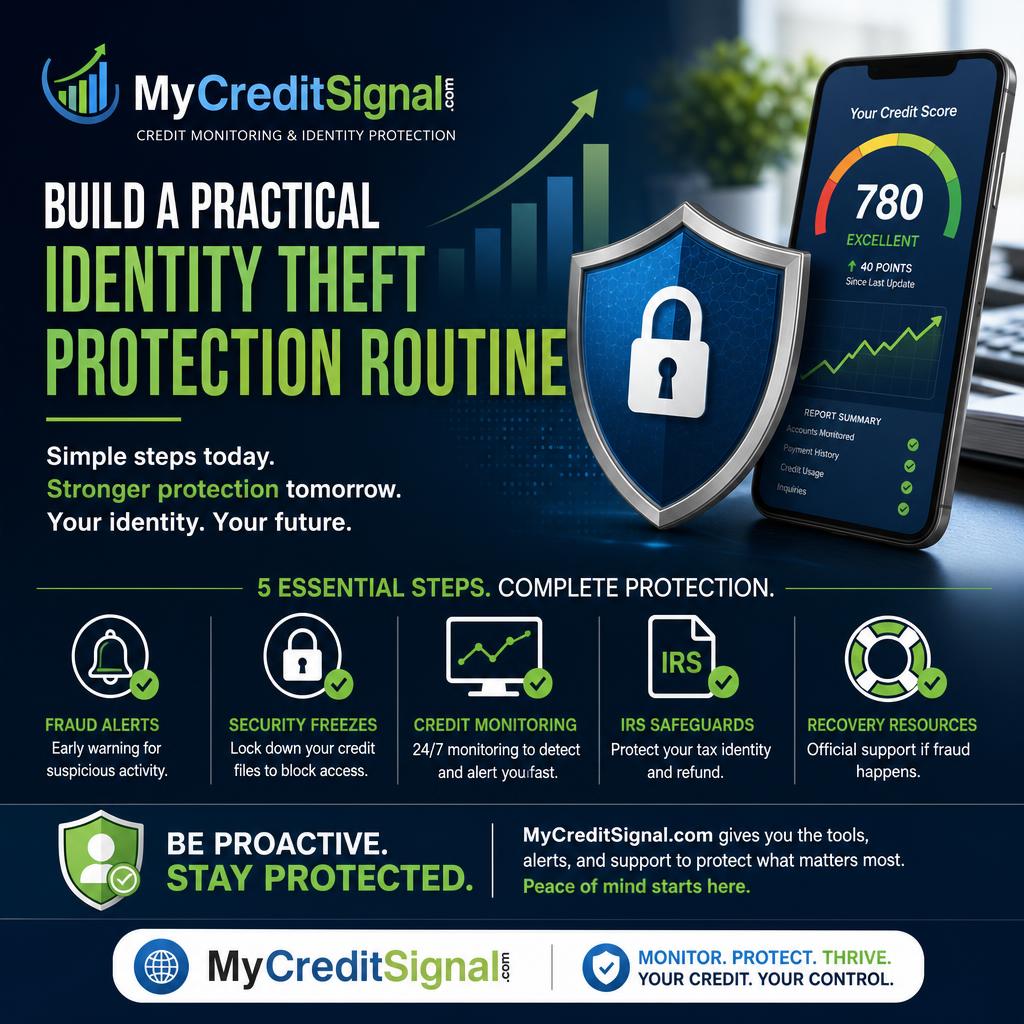
A stolen password, unfamiliar account, or suspicious tax notice can turn an ordinary week into a financial cleanup project. Identity theft protection means reducing the chance that someone can use your personal information, detecting unusual activity quickly, and knowing which official steps to take if something happens.
This guide is for anyone who wants a practical security routine, especially people applying for credit, managing several financial accounts, filing taxes, or sharing personal information online. You will learn what to do first, when to use a fraud alert or security freeze, how an IRS IP PIN works, and which habits help you monitor your credit without making protection overwhelming.
Contents
- 1 Who needs identity theft protection most?
- 2 How do fraud alerts and security freezes protect you?
- 3 Which identity protection numbers and timelines matter?
- 4 What should you do first if you suspect identity theft?
- 5 What mistakes make identity theft harder to contain?
- 6 What does a practical protection routine look like?
- 7 When does this advice need a different approach?
- 8 Frequently asked questions about identity theft protection
- 9 Helpful tools and official resources
- 10 Build protection into your normal money routine
Key Takeaway
- Use IdentityTheft.gov first if you suspect theft so you receive a personalized recovery plan.
- Choose a fraud alert when you want lenders to verify you, or a security freeze when you want to block access to your credit report.
- Protect tax filings with an IRS IP PIN and review credit activity regularly.
Who needs identity theft protection most?
Everyone benefits from basic protection, but the priority is higher when your information is exposed or your financial activity is changing. Pay particular attention if you have received a data breach notice, lost a wallet, used a public computer for financial activity, shared account information through an unexpected message, or noticed a login or transaction you do not recognize.
People preparing to apply for a mortgage, auto loan, apartment, or credit card may also want a stronger setup before applying. A security freeze can help prevent new-account activity, but it may require you to lift or remove the freeze when a legitimate lender needs access. A fraud alert is less restrictive because it asks lenders to take extra identity-verification steps rather than blocking access entirely.
If your concern involves an existing bank, card, or payment account, contact that company through an official app, statement, or verified website. Credit protection alone does not replace securing the account where the suspicious activity occurred.
How do fraud alerts and security freezes protect you?
A fraud alert is a warning placed on your credit report that tells lenders to take extra steps to verify your identity before opening new accounts in your name. A security freeze is a lock that prevents lenders from accessing your credit report unless you lift the freeze. Both tools focus mainly on new-account fraud, so they work best alongside account monitoring and strong online-security habits.
If you suspect identity theft, the CFPB recommends placing a fraud alert or security freeze and filing a report at IdentityTheft.gov through the CFPB’s recovery guidance. IdentityTheft.gov is a government-run resource that creates a personalized recovery plan and organizes the actions relevant to your situation.
A fraud alert generally lasts at least one year under the applicable framework. If you become a qualifying victim, you may be able to request an extended fraud alert that can remain on your credit reports for at least seven years. The exact process depends on your circumstances and the documentation requested, so use official instructions rather than relying on a message or phone number supplied by a stranger.
Which identity protection numbers and timelines matter?
The most useful numbers in an identity theft protection plan are not a monthly spending target or a complicated score formula. They are the timelines and identifiers that determine how quickly you can act.
- One year: A fraud alert can remain for at least one year under certain rules after you contact a credit reporting agency.
- Seven years: An extended fraud alert may be available to qualifying identity theft victims and can provide alerts and updated credit information for at least seven years.
- Six digits: An IRS IP PIN is a six-digit number that helps verify that a tax return is filed with your consent.
- Two million: The CFPB’s 2025 credit card market report reference cited approximately two million consumer-submitted credit-card-related identity theft reports. That figure is a reminder to treat suspicious activity promptly, not proof that every consumer faces the same risk.
An IRS IP PIN is separate from a credit-report alert or freeze. It helps protect the tax-filing channel, where a thief may try to submit a return or misuse tax information. The IRS describes IP PINs as a key tool for protecting taxpayers from identity thieves; learn about the program through the IRS identity protection PIN guidance.
What should you do first if you suspect identity theft?
Start with containment and documentation, then move to ongoing monitoring. Do not wait until every detail is clear before taking the first protective step.
Open IdentityTheft.gov and follow the customized plan
Visit IdentityTheft.gov before taking scattered actions. The service helps identify the type of theft involved and provides a recovery checklist. Save the case information, dates, messages, and contact details in a secure location.
Secure the affected account
Contact the bank, card issuer, lender, email provider, or other company through a trusted channel. Change the affected password and any other account that reused it. Ask what protection the company can place on the account and how it will communicate future updates.
Place a fraud alert or security freeze
Choose the tool that matches your immediate goal. A fraud alert asks lenders to verify identity; a freeze blocks access to your credit report until you lift it. Keep confirmation details and instructions for future legitimate applications.
Review credit activity and account notifications
Look for unfamiliar accounts, applications, balances, or contact information. Turn on alerts offered by your financial institutions, and use a reputable credit monitoring service to notify you about changes. Monitoring is a detection tool, not a guarantee that every type of identity theft will be caught.
Protect your tax filing with an IRS IP PIN
Review the IRS IP PIN program and determine whether it fits your situation. The six-digit PIN helps the IRS verify that a tax return was filed with your consent. Keep the PIN private and use official IRS channels rather than responding to unsolicited requests.
Make online access harder to misuse
Use unique passwords for financial and email accounts, enable multifactor authentication where available, and avoid sending sensitive information through unexpected links or messages. Shred or securely dispose of documents that contain account or tax information, and review privacy settings on services that store personal data.
What mistakes make identity theft harder to contain?
Waiting for certainty before acting
Behavior: You ignore a suspicious notice because you are not sure it proves theft. Consequence: A thief may have more time to use the information or open additional accounts. Fix: Start with IdentityTheft.gov, contact the affected company through a trusted channel, and document what you know.
Using contact information from an unexpected message
Behavior: You call a number or click a link supplied in a text, email, or social message. Consequence: You may hand more information to the person who is trying to obtain it. Fix: Open the official app, use a statement, or type the verified website address yourself.
Relying only on a credit score
Behavior: You check your score but never review account activity or tax-related protections. Consequence: Some identity theft may not produce an immediate score change. Fix: Pair score tracking with account alerts, credit-report review, and an IRS IP PIN discussion when appropriate.
Freezing credit without planning for legitimate applications
Behavior: You place a freeze and forget how to manage access later. Consequence: A legitimate lender may be unable to review your credit when you apply. Fix: Store the freeze instructions securely and plan ahead before a known credit application.
What does a practical protection routine look like?
Use a first-versus-later framework to keep the work manageable. First, contain active risk: secure the affected account, use IdentityTheft.gov, and select a fraud alert or freeze. Next, protect other channels: review tax safeguards, strengthen passwords, and enable account notifications. Later, maintain the routine by checking activity periodically and updating contact information with financial institutions.
A simple weekly checklist can include reviewing bank and card alerts, scanning email for unexpected account changes, confirming that multifactor authentication remains enabled, and checking whether any legitimate credit application is pending. Keep records of dates and conversations so you can explain the sequence if another institution asks for information.
For a concrete example, imagine receiving a notification about an account application you did not make. On the same day, you could contact the named company through its official website, save the notification, visit IdentityTheft.gov, and place a fraud alert or freeze based on your need for new credit. You could then review other account alerts and investigate an IRS IP PIN. The sequence matters more than trying to solve every possible risk in one sitting.
When does this advice need a different approach?
Fraud alerts and freezes are strongest against new-account credit fraud, but identity theft can also affect existing accounts, tax filings, benefits, medical information, or online services. A clean credit check does not prove that all personal information is safe. If the suspicious activity concerns taxes, follow IRS instructions; if it concerns an existing bank or card account, follow that institution’s security process as well.
People on active duty may have additional alert options, and qualifying identity theft victims may have access to an extended fraud alert. The Federal Reserve’s Section 605A overview of fraud and active-duty alerts explains the relevant framework. Eligibility and documentation can vary, so confirm the details with the appropriate official source.
If you are helping a child, older family member, or someone with limited online access, use a shared process with clear permission. Do not collect or store their sensitive information casually. When a situation involves threats, coercion, or a vulnerable adult, consider involving an appropriate trusted professional or government resource.
Frequently asked questions about identity theft protection
What should I do immediately if I suspect identity theft?
Visit IdentityTheft.gov to create a personalized recovery plan, secure the affected account through a trusted channel, and consider a fraud alert or security freeze. Document notifications, dates, and contact information as you proceed.
How long does a fraud alert last?
A fraud alert lasts at least one year under certain rules. Qualifying victims may be able to request an extended fraud alert that can remain for at least seven years.
What is an IRS IP PIN?
An IRS IP PIN is a six-digit number that helps verify that your federal tax return was filed with your consent. It is a tax-protection tool and works separately from credit monitoring, fraud alerts, and security freezes.
Helpful tools and official resources
Use official guidance for recovery and a repeatable credit routine for prevention. The FTC identity theft advice hub provides centralized consumer guidance for reporting and recovery. You can also use the credit score simulator to understand how future credit decisions could affect your profile; it does not replace monitoring for suspicious activity.
If you prefer a simple monthly routine, read how to track your credit score monthly and pair that habit with account alerts and careful review of unfamiliar activity. The free tools remain useful whether you choose a fraud alert, a freeze, or neither.
Get weekly credit tips, tool updates, and practical guides – free.
Build protection into your normal money routine
Identity theft protection works best as a sequence rather than a one-time purchase: guard personal information, secure accounts, monitor meaningful changes, and respond through official channels. If you suspect theft, begin with IdentityTheft.gov, then choose the credit protection tool that matches your situation and add tax-specific protection when appropriate.
Your next step this week is to turn on available account alerts, review your passwords and multifactor authentication, save official recovery links, and decide whether a fraud alert or security freeze better fits your current plans. A few organized actions can make suspicious activity easier to spot and easier to contain.



Leave a Reply
You must be logged in to post a comment.