

If a credit repair company charges an illustrative $100 each month, six months of service would total $600 before any extra products or fees. DIY credit repair can cost $0 for core consumer actions, but it requires your time and organization. This comparison is for people deciding whether paid help is worth the cost; by the end, you will have a practical way to choose what to do first, what to skip, and how to protect your budget.
A credit repair company is a for-profit business that offers to improve credit profiles for a fee. DIY credit repair means handling your own monitoring, records, education, and credit-building decisions with free or low-cost resources. Neither option can legally guarantee removal of accurate, timely negative information.
Contents
- 1 Who should compare DIY credit repair with a company?
- 2 What does DIY credit repair actually include?
- 3 How much can a paid credit repair plan cost?
- 4 What does CROA mean for credit repair fees?
- 5 Which option saves more in common situations?
- 6 What should you do this week before paying anyone?
- 7 What mistakes make paid credit repair more expensive?
- 8 When does the DIY comparison not tell the whole story?
- 9 DIY credit repair versus a company FAQ
- 10 Helpful tools for a lower-cost starting point
- 11 The bottom line on DIY credit repair versus a company
Key Takeaway
Start with the free DIY path unless you have a clearly defined need for paid organization or coaching, and judge any company by its contract, promises, and total cost rather than its advertised score outcome.
- DIY cost: Core consumer actions can be completed for free, although optional monitoring or add-ons may cost money.
- Paid-company cost: Monthly fees can add up quickly; an illustrative $100 monthly charge becomes $600 over six months.
- Legal boundary: No legitimate provider can erase accurate information or guarantee a perfect result.
- Best first move: Build a written baseline, identify the actual problem, and use free tools before buying a service.
Who should compare DIY credit repair with a company?
This comparison matters most if you are rebuilding after missed payments, preparing for a major application, or paying for a subscription you do not fully understand. It is also useful if a salesperson promises fast score changes, deletion of every negative item, or a result that sounds too certain.
DIY is usually a reasonable starting point for someone who can set aside regular time, keep records, and follow instructions carefully. It may be a poor fit if you have limited internet access, difficulty managing paperwork, or a situation that requires individualized legal advice. A nonprofit credit counselor may be more appropriate for a broader debt or cash-flow problem, because credit repair and debt management are not the same service.
Paid help also does not automatically mean better results. The CFPB explains that credit repair businesses often charge for actions consumers can perform themselves for free. The CFPB explanation of credit repair and counseling is a useful starting point before signing anything.
What does DIY credit repair actually include?
DIY credit repair is a process, not a magic product. It can include obtaining your reports, reviewing account details, organizing supporting records, communicating directly with the appropriate company, and making a plan for future payments and balances. The goal is to understand and manage your credit profile, not to manufacture a particular score.
Consumers have legal rights to challenge information they believe is inaccurate without paying a credit repair company. That does not mean every challenge succeeds, and it does not apply to accurate information simply because it is negative. The FTC warns that many scams falsely promise to remove accurate information. Read its guidance on debt relief and credit repair scams before paying an upfront fee.
The DIY path may still involve optional costs. You might choose a monitoring product, buy postage or copies, or pay for a budgeting tool. Those expenses are different from paying a company every month for a promise of improvement. Record each cost so you can compare the complete total.
How much can a paid credit repair plan cost?
The exact price varies by company and package, so compare the full contract rather than relying on a monthly headline. Common charges can include a recurring monthly fee, an enrollment fee, or add-on services. Experian notes that some extras increase the price without guaranteeing an outcome in its guide to the cost of credit repair.
Use this simple formula: total service cost equals enrollment charges plus monthly fee multiplied by the number of months, plus add-ons. For example, a plan with an illustrative $100 monthly charge costs $300 after three months and $600 after six months, before any other charges. That money could instead support an emergency buffer, overdue obligations, or a structured repayment plan, depending on your priorities.
Do not assume that a higher fee buys a higher score. Credit scores depend on the data reported about your accounts and on the scoring model used. Results can vary by credit profile, lender, and scoring model. FICO reports that the average U.S. FICO Score was approximately 715 in 2024 to 2025, but an average is a benchmark, not a target that every person must reach.
What does CROA mean for credit repair fees?
CROA is the Credit Repair Organizations Act, a federal law that regulates credit repair companies. It requires certain disclosures and restricts how and when companies can charge in covered situations. CFPB materials reference a six-month period after telemarketing enrollment before a credit repair service may begin collecting fees in relevant circumstances.
That rule is not a reason to trust a provider automatically. Ask for the written contract, the total price, cancellation terms, the specific service promised, and the conditions for any fee. Be especially cautious when a salesperson demands payment before explaining what will be done or says the company can guarantee deletion of accurate information.
Which option saves more in common situations?
DIY usually saves more money when the task is education, organization, monitoring, or taking actions that are legally available to you at no charge. A paid company may feel more convenient when you are overwhelmed, but convenience should be priced as a service and evaluated against your actual need.
Use this decision framework:
- Choose DIY first if your main need is understanding your profile, creating a checklist, or building better payment habits.
- Compare a nonprofit option if several debts, high expenses, or irregular cash flow are the central problem.
- Consider paid assistance cautiously only if the provider offers a clearly defined service you cannot reasonably organize yourself and the written cost fits your budget.
- Walk away if the provider guarantees removal of accurate information, promises a specific score, or pressures you to pay immediately.
Do the free baseline first and delay a paid decision until you know what remains. A service cannot give you a meaningful cost-benefit comparison if you do not know whether your main issue is payment history, balances, account age, or something else.
What should you do this week before paying anyone?
These steps help you create a useful baseline and make the DIY-versus-company decision with evidence instead of sales pressure.
Write down the problem you want to solve
Use one sentence, such as “I need a clearer credit-building routine” or “I want to understand why my score changed.” Avoid vague goals such as “fix everything,” because they make it difficult to measure whether a service delivered anything useful.
Gather your free information
Collect the reports, account statements, payment reminders, and current balances you already have access to. The three major bureaus offer free annual credit reports, and the FTC explains the basic DIY process in its credit fixing FAQ.
Separate facts from promises
Make two columns: what your records show and what a company claims it can do. Keep accurate negative information in the first column rather than treating it as something a provider can legally erase. Put guaranteed score increases and instant results in the warning column.
Build a 90-day action list
Choose a small number of actions you can repeat, such as setting payment reminders, reviewing balances before statements close, and avoiding new obligations you cannot afford. Track the date, action, and result. A consistent record is more useful than repeatedly buying a new promise.
Price the paid alternative
Ask for every fee in writing and multiply the monthly charge by the number of months you expect to remain enrolled. Compare that total with $0 for the core DIY path and with any optional tool costs. If the company will not provide a clear price, do not enroll.
Reassess before adding help
After you complete your baseline and action list, decide whether the remaining need is organization, education, debt repayment, or legal advice. Choose help for that specific need instead of paying for a broad promise to improve your credit.
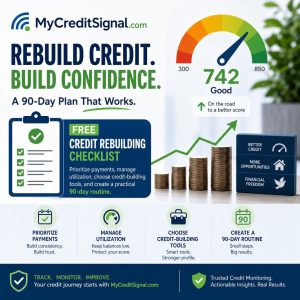
You can start by using the credit rebuilding checklist to organize the week’s tasks and the credit score simulator to explore possible planning scenarios. These free tools do not replace lender decisions, but they can help you prepare before spending money.
What mistakes make paid credit repair more expensive?
Paying for a guarantee
Behavior: You enroll because a salesperson promises that every negative item will be removed. Consequence: You may pay recurring fees for an outcome no legitimate provider can guarantee. Fix: Treat guaranteed deletion of accurate information as a reason to stop and verify the offer.
Ignoring the total enrollment cost
Behavior: You focus on a monthly fee without calculating how long you may stay enrolled. Consequence: An illustrative $100 monthly charge becomes $600 over six months. Fix: Calculate the full expected cost, including enrollment fees and add-ons, before signing.
Buying help before identifying the problem
Behavior: You purchase a general package without knowing whether your priority is budgeting, payment routines, or account balances. Consequence: You may pay for services that do not address the factor affecting your situation. Fix: Complete the free baseline and write one measurable goal first.
Stopping your own account management
Behavior: You assume a company will handle every credit decision for you. Consequence: You can miss important due dates or lose visibility into your accounts. Fix: Keep your own reminders, statements, records, and budget even if you hire outside help.
When does the DIY comparison not tell the whole story?
The lowest dollar cost is not always the easiest path. Someone who cannot keep track of documents or deadlines may value structured support, but that support should be transparent and limited to a service the provider can legally perform. A company also cannot substitute for a qualified attorney when a legal matter requires legal advice.
DIY is not a promise of a particular score or timeframe either. Credit information can be reported on different schedules, and lenders may use different scoring models. The same action may affect two profiles differently. FICO describes its score as a measure developed from reported credit data, so your starting profile and the model being used matter.
Be cautious with any provider that tells you to create a new identity, misrepresent information, or stop communicating with creditors. Those instructions create risks far beyond the monthly fee. The FTC’s continuing enforcement work against credit repair and debt-relief scams is a reminder to verify the business and its contract before sharing payment information.
If you want a tailored 90-day roadmap after using the free tools, the optional personalized Credit Signal Action Plan is available as a one-time paid next step; the free tools remain free.
DIY credit repair versus a company FAQ
Is DIY credit repair really free?
Many core consumer actions can be completed for free, including obtaining free annual reports and exercising legal rights available to you. Optional monitoring, postage, or other add-ons can create costs, so track the complete amount.
Can a credit repair company remove accurate negative information?
No legitimate company can guarantee removal of accurate, timely information. The CFPB and FTC warn consumers about providers that promise to erase accurate negative items or guarantee a particular outcome.
How should I compare a credit repair company’s price?
Ask for every fee in writing, multiply the monthly charge by the expected enrollment period, and add enrollment or product fees. Compare that total with the free DIY path and confirm exactly what service the company will provide.
Helpful tools for a lower-cost starting point
Use the credit rebuilding checklist to turn broad goals into repeatable tasks. The credit score simulator can help you think through scenarios, while the credit letter helper can help organize written communication when that is appropriate. Use tools to prepare and document your plan, not as a promise of a guaranteed score outcome.
Get weekly credit tips, tool updates, and practical guides – free.
The bottom line on DIY credit repair versus a company
DIY credit repair generally offers the clearest cost advantage because core actions can be completed for free, while paid companies may charge recurring fees for work you can often organize yourself. A six-month illustrative $100 monthly plan would cost $600, so the decision deserves more than a quick response to an advertisement.
Start with your free baseline, write a specific goal, price the alternative, and reject guarantees that sound impossible. Your next step is simple: use the checklist this week, record what you learn, and pay for outside help only when it solves a clearly defined problem at a transparent cost.


Leave a Reply
You must be logged in to post a comment.