
A household can face a higher health insurance bill in 2026 even when it keeps the same plan, because premiums, subsidies, deductibles, and insurer pricing can all change. This guide is for Marketplace shoppers, self-employed workers, and anyone rebuilding a household budget around a new premium. You will learn how to compare the full cost of coverage, identify which number matters first, and protect room for essentials and credit payments.
For 2026, CMS projects that eligible Marketplace enrollees may pay around $50 per month after tax credits for the lowest-cost plan on average. That figure is not a personal quote, however, and a low premium can come with a high deductible or different provider network. The useful question is not simply, “What is the monthly premium?” It is, “What combination of premium, medical spending, and financial risk fits my household?”
Contents
- 1 Who needs a 2026 health insurance cost plan?
- 2 Why can health insurance costs rise in 2026?
- 3 Which health insurance numbers belong in your budget?
- 4 How do subsidies change the 2026 comparison?
- 5 What should you do first, and what can wait?
- 6 A five-step plan for managing health insurance costs
- 7 Three mistakes that make coverage harder to afford
- 8 What can this guide miss?
- 9 Health insurance costs 2026 FAQ
- 10 Tools and resources for your next decision
- 11 Make your 2026 coverage decision part of the budget
Key Takeaway
Build your 2026 health insurance budget from the after-subsidy premium plus likely care costs and the plan’s out-of-pocket maximum, then compare that total with your cash flow before enrolling.
Who needs a 2026 health insurance cost plan?
This information matters most if you buy coverage through HealthCare.gov or a state-based exchange, lose employer coverage, work independently, or expect your income to change. It is also useful if a premium increase could force you to delay savings, rely on a credit card for medical bills, or pay other obligations late.
A person with stable employer-sponsored coverage may need a different comparison. Start with the employer’s employee contribution, deductible, network, and tax treatment rather than assuming Marketplace pricing is the better benchmark. Someone eligible for Medicare, Medicaid, or another public program should also check those options before selecting an individual Marketplace plan.
The goal is not to choose the cheapest plan for every household. The goal is to match predictable monthly costs with the amount of medical risk and cash-flow uncertainty you can reasonably absorb.
Why can health insurance costs rise in 2026?
Health insurance costs can rise because insurers adjust premiums for medical cost growth, plan participation, expected claims, and changes in the risk pool. CMS and other analyses describe 2026 as a year with meaningful premium disruption, so staying with the same plan does not guarantee that your bill will stay unchanged.
An APTC, or Advanced Premium Tax Credit, is a tax credit that lowers a qualifying person’s monthly Marketplace premium based on household income and other eligibility information. The credit can make a plan affordable, but it does not freeze the insurer’s full premium. If the full premium changes, your after-credit bill can change too.
A benchmark premium is the price of a reference Silver plan used to calculate subsidies. A Silver plan is an ACA plan tier with moderate premiums and cost-sharing, and it is often important for subsidy and CSR comparisons. CSR, or Cost-Sharing Reduction, can lower deductibles, copayments, and coinsurance for eligible people, primarily when they choose Silver coverage.
State-based exchanges, or SBEs, are state-run Marketplace platforms. Their subsidy structures and plan choices can produce different after-subsidy costs from plans offered through HealthCare.gov, so a headline national average cannot predict every state or household.
Which health insurance numbers belong in your budget?
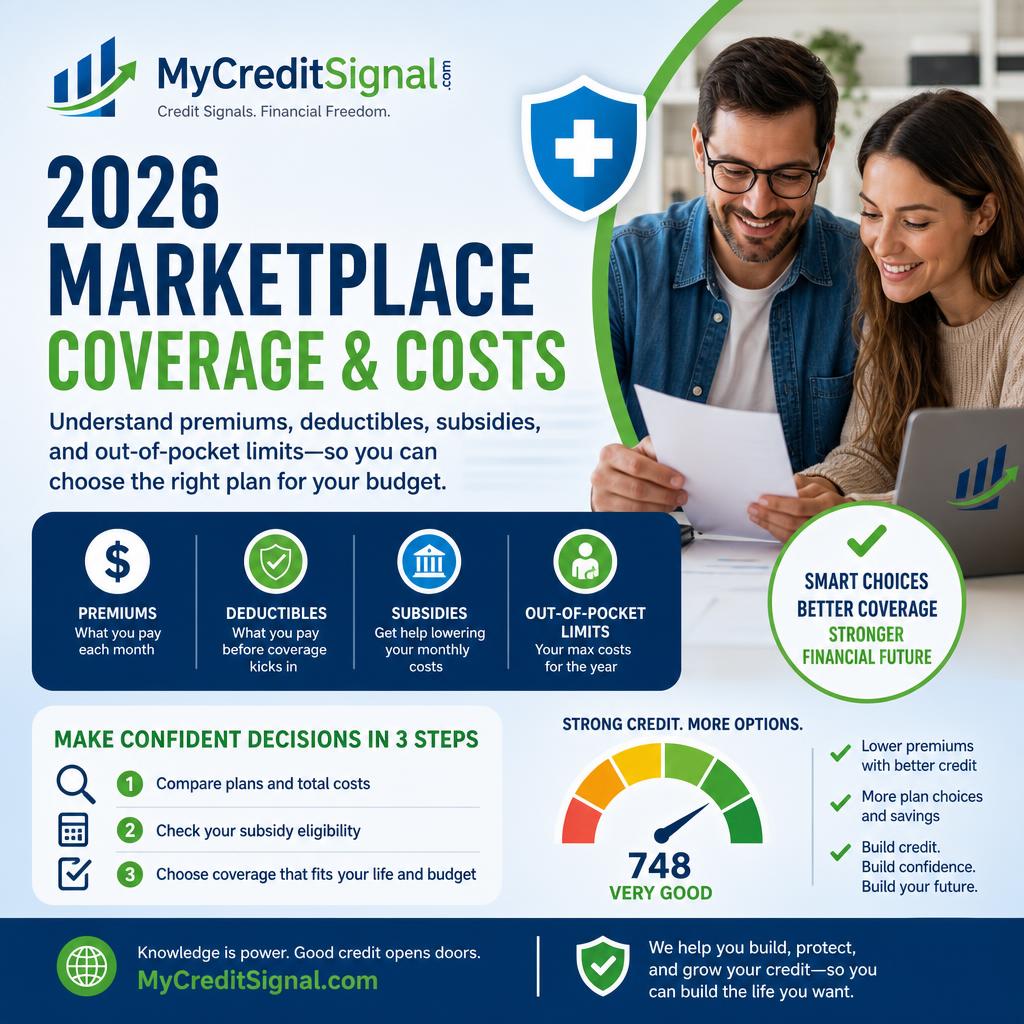
Use five numbers when comparing plans: monthly premium, deductible, copayment, coinsurance, and out-of-pocket maximum. HealthCare.gov explains that total costs include more than the premium, so a plan with the lowest monthly bill may not have the lowest annual cost.
- Premium: The recurring amount paid to keep coverage active, after any applicable tax credit.
- Deductible: The amount you generally pay for covered services before the plan begins sharing more costs.
- Copayment: A set amount for a covered service, such as a visit or prescription, when the plan applies a copay.
- Coinsurance: A percentage of a covered service that you pay after the plan’s rules apply.
- Out-of-pocket maximum: The plan’s annual limit on what you pay for covered, in-network services under the plan rules.
For a simple annual comparison, use this formula: annual premium plus expected covered care spending. Then perform a safety check using annual premium plus the out-of-pocket maximum. The second calculation is not a prediction of what you will spend; it shows the size of a severe covered-care risk that your cash reserves may need to handle.
For example, suppose Plan A has a lower premium but a deductible that makes routine care expensive, while Plan B costs more each month but offers lower cost-sharing. A person who rarely uses care may prioritize Plan A’s cash flow. A household managing regular prescriptions or appointments may prefer Plan B if its predictable cost and network better match actual needs. Use your own expected care pattern rather than choosing from the premium column alone.
How do subsidies change the 2026 comparison?
Subsidies reduce the premium you pay, but eligibility and the amount can change when income, household size, or policy rules change. CMS reporting shows that after-subsidy premiums can differ between HealthCare.gov consumers and state-based exchanges, including because subsidy structures differ.
When estimating your cost, enter your best current household income estimate and update it if your work situation changes. Self-employed shoppers and people with irregular income should avoid treating an early-year estimate as permanent. Keep records of income changes and review the Marketplace account when circumstances shift.
Enhanced premium tax credits are scheduled to expire after 2026 under the policy change described in the research context. That means affordability could change for many enrollees beyond 2026, even if their medical needs and insurer remain similar. Do not build a long-term budget on the assumption that today’s subsidy will continue indefinitely.
For an official starting point, review the CMS 2026 Marketplace plans and prices fact sheet and compare the actual plan details available for your household.
What should you do first, and what can wait?
Do the actions that prevent a coverage or cash-flow problem first. Fine-tuning the plan comes later.
- First, confirm eligibility and enrollment dates. A low-cost plan is not useful if you miss the enrollment window or fail to complete required steps.
- Next, calculate the after-subsidy premium. Use the Marketplace estimate based on your current household details, not an old renewal notice alone.
- Then, check the network and prescriptions. A plan that excludes your preferred doctor or medication may create costs that the premium comparison misses.
- After that, compare cost-sharing. Review the deductible, copays, coinsurance, and out-of-pocket maximum together.
- Finally, place the monthly cost into your cash-flow plan. Decide whether the premium is paid from each paycheck, one monthly transfer, or another reliable source.
You can use My Credit Signal’s paycheck budget allocator to see how a recurring premium fits beside other paycheck commitments. If your income changes from month to month, the guide to budgeting with irregular income can help you assign money without assuming every month looks the same.
A five-step plan for managing health insurance costs
Write down the full household picture
List everyone seeking coverage, expected income sources, regular medical needs, prescriptions, and any employer contribution. Include income that varies so your estimate reflects real cash flow rather than only your best month.
For each serious option, record the monthly premium, annual premium, deductible, and out-of-pocket maximum. This creates a fast first-pass comparison before you spend time reading every benefit detail.
Test a routine-care scenario
Ask what happens if you use regular appointments, prescriptions, or lab services. Check whether the plan uses copays before the deductible, requires coinsurance, or limits care to a particular network.
Test a high-cost scenario
Use the out-of-pocket maximum as a stress-test figure for covered, in-network care. Ask whether your emergency savings and monthly budget could handle the premium plus that potential exposure without relying on new debt.
Schedule a review before the next tax year
Put a reminder on your calendar to review income, household size, premium changes, and subsidy information before the next enrollment decision. A change in circumstances can affect the estimate you should use.
Three mistakes that make coverage harder to afford
Behavior: Selecting the plan with the smallest recurring bill without checking cost-sharing or network rules. Consequence: A medical visit, prescription, or unexpected covered service can create a larger cash demand than your budget can handle. Fix: Compare premium, deductible, expected care, and out-of-pocket maximum as one decision.
Assuming the current subsidy is permanent
Behavior: Treating an existing tax credit as a guaranteed long-term discount. Consequence: A policy change or income update can leave your budget short. Fix: Keep a before-credit premium reference, review eligibility information, and leave room for future changes.
Ignoring irregular income
Behavior: Estimating Marketplace income from one unusually strong or weak month. Consequence: The premium estimate may not match your household reality, and the rest of your budget may become unstable. Fix: Use your best documented annual estimate, update it when circumstances change, and set aside money during stronger months.
What can this guide miss?
Plan documents matter. A national explanation cannot tell you whether a particular hospital is in-network, whether a medication is covered on the preferred tier, or whether a service needs prior authorization. Verify those details directly in the plan materials before enrolling.
Also, the cheapest plan may not be the right answer for someone with frequent care, a narrow provider preference, or limited emergency savings. Conversely, paying more for a richer plan may not be worthwhile if you rarely use care and can comfortably handle the plan’s cost-sharing. The right choice depends on both expected use and financial resilience.
The Federal Reserve reported that 92% of adults were insured in 2024, and Census reported that private insurance covered 66.1% of the population. Coverage is common, but being insured does not eliminate budget pressure. Premiums and care costs can still compete with savings, debt payments, and everyday bills.
Health insurance costs 2026 FAQ
What is the average ACA Marketplace premium after subsidies in 2026?
CMS projects an average of around $50 per month after tax credits for eligible enrollees choosing the lowest-cost 2026 Marketplace plan. Your actual price can differ based on income, location, household details, plan choice, and exchange type.
Should I choose a Silver plan in 2026?
A Silver plan may be worth comparing when you expect regular care or qualify for cost-sharing reductions, which can lower deductibles, copayments, and coinsurance for eligible enrollees. Compare the complete plan details rather than assuming one metal tier is best for everyone.
Will health insurance subsidies continue after 2026?
Enhanced premium tax credits are scheduled to expire after 2026 under the policy change in the research context. Because future affordability may differ, avoid assuming that your current after-subsidy premium will remain unchanged.
Tools and resources for your next decision
Start with the official HealthCare.gov total-cost guidance to understand how premiums, deductibles, copayments, coinsurance, and out-of-pocket limits work together. For household planning, use the net worth tracker to monitor whether medical costs are reducing savings or increasing balances over time.
If rising premiums are competing with savings goals, review the emergency fund budget plan and focus on a sustainable contribution rather than abandoning the goal entirely. Free budgeting and tracking tools remain available while you compare coverage.
For broader 2026 context, read the Urban Institute analysis of 2026 ACA premium increases and the CMS 2026 Open Enrollment Report.
Get weekly credit tips, tool updates, and practical guides – free.
Make your 2026 coverage decision part of the budget
Health insurance costs in 2026 cannot be judged by the premium alone. Start with the after-subsidy amount, compare the plan’s cost-sharing and network, and stress-test the out-of-pocket exposure against your available cash.
Your next step this week is simple: gather your household income estimate, price the available plans, and place the most realistic premium into your paycheck or monthly budget. That process gives you a clearer way to protect coverage without losing sight of savings, bills, and credit goals.



Want to understand your credit report?
Get plain-English explanations with our free AI Credit Analyzer →
Leave a Reply
You must be logged in to post a comment.